AM Radio Gold:1978
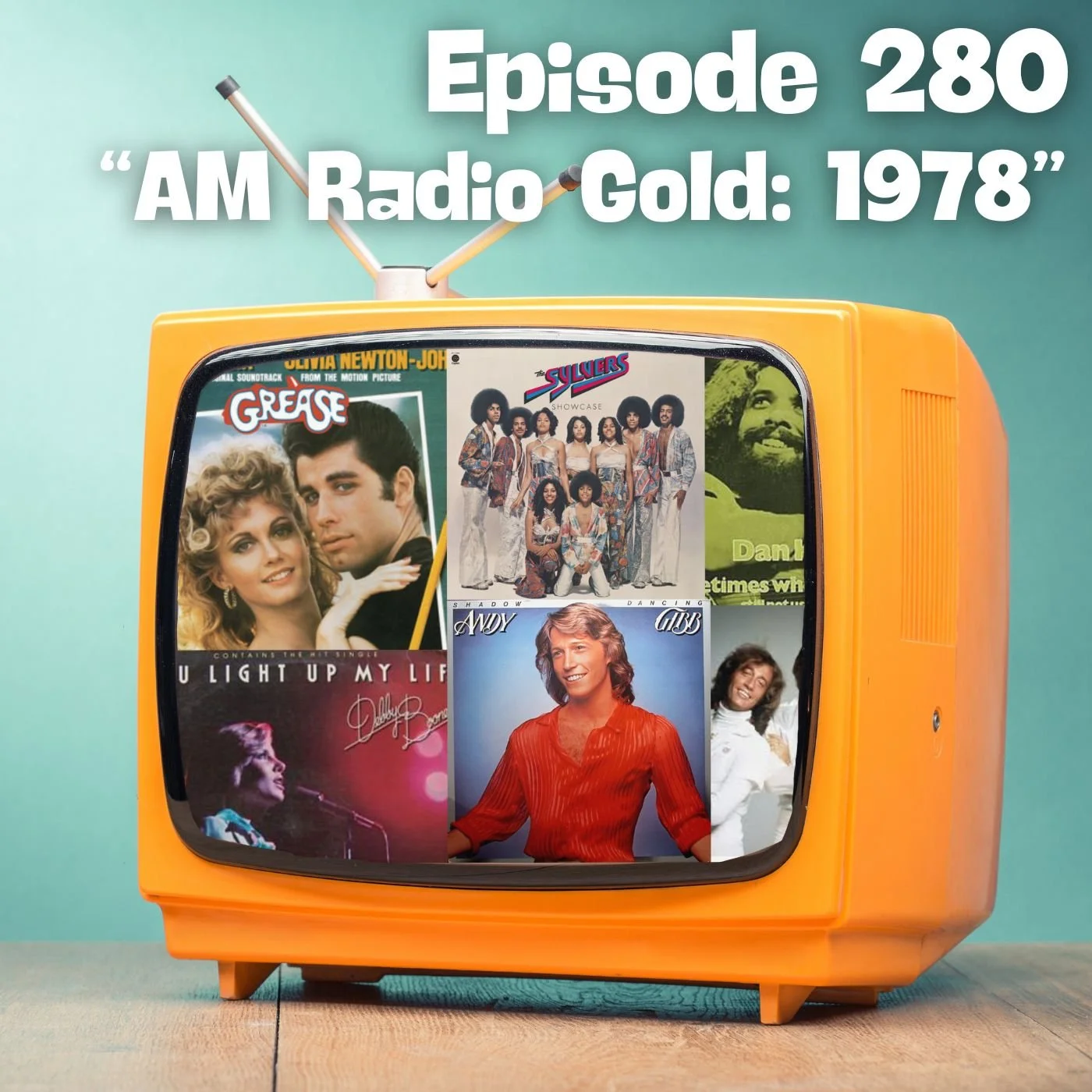
Kristin Nilsen 0:00
So I am 10 years old. I am in fourth and fifth grade. I am a classic tween. I've just graduated from my love affair with Sean Cassidy, which was my internship for a much hairier relationship that was coming with Andy Gibb. Satin bathrobes. Yep, exactly. We're going to wear our bathrobes around our apartment. That was our. That was my fantasy.
Carolyn Cochrane 0:36
Welcome to the Pop Culture Preservation Society, the podcast for people born in the big wheel generation who used their recorder to do air sacs during the chorus of Baker Street. I'm doing my fingers now. We believe our Gen X childhoods gave us unforgettable songs, stories, characters, and images, and if we don't talk about them, they'll disappear, like Marshall, Will, and Holly on a routine expedition.
Kristin Nilsen 1:08
And today we'll be revisiting the songs we heard on the radio when we were 910, and 13 years old-a year we are now declaring the PCPS's greatest year in music. Today's episode is the next installment of our series called AM Radio Gold, and we're talking about the year 1978.
Carolyn Cochrane 1:28
I'm Carolyn.
Michelle Newman 1:29
I'm Kristen. And I'm Michelle, and we are your pop culture preservationists.
Kristin Nilsen 1:47
When we chose 1978 for our next episode of AM Radio Gold, Michelle started researching ASAP and promptly left this message in our group chat. She says, and I quote: "Guys, I took a peek at the Billboard Top 100 from 1978, and all caps, my God, that was a great year for music. And then I followed up with AM Radio Gold 1978 is canceled because I can't pick only three songs. Again, all caps. Every song is vital to my existence. How will we ever do this? And it is always-it's always hard to choose songs. But this was ridiculous hard. We always start by consulting the Billboard Top 100 for the year and perusing the songs. You're looking for standouts for songs that jump out at you for being that song, right? A song that defined a moment for you, or a song that goes along with a certain memory, and you're looking for a song. You have to dig which one will jump out at me. But when I opened the top 100 for 1978, I looked at the number one song. I mean, forget about it. I just started to cry. I just started to cry on the spot.
Michelle Newman 2:57
Well, when I looked at the number one song, I also started to cry for you. Yes,
Kristin Nilsen 3:02
right for me too. Right, yes, that's right. So then the number two song, another highly personal song. Number three, another number four, another. I got all the way to number 15 before I found a song that I didn't want to talk about, and it was a song I truly hated. Every single one, yeah. Every single song.
Michelle Newman 3:23
The the thing for me, since I was only eight, turning nine. For me, it was the list of the top 100 is a perfect mix of songs that I remember being eight and nine, and I'll tell you, you know, like who I was then in a little bit, and but it's also a mix of songs I love now, like that I don't think I listened to then, like I do now. So to me, it it's almost like the perfect mix in that playlist, really.
Carolyn Cochrane 3:52
And you're not the only one who thinks that, Michelle, because as I was doing research for this episode, I don't know if either of you are familiar with this 1996 album by Barry Manilow called "The Summer of 78, where he covers 12 of many of these songs that we are going to talk about today. Even the intro song of this album he wrote, and it's called "The Summer of 78, and it's about you know this person in his life and how the music influenced their relationship and all of that. So we are not alone in realizing that this was a very impactful year music wise.
Kristin Nilsen 4:31
Yes, yeah, and it just supports what we're saying here, right? That whoa, 1978 all caps, and we just didn't realize it till we started researching for this episode. So we'll reveal the top 14 in just a second. Top 14, I know sounds funny, but it's significant. But let me first just talk about Andy Gibb for a second. So the top 100 in 1978 is riddled with Andy Gibb, who I think might be one of my spirit guides. This is just. One of the reasons that the top 100 in 1978 was making me hyperventilate. I was falling in love in 1978 playing that album, playing Shadow Dancing, playing Flowing Rivers. So every single one of his songs is personal to me. As a result, I just want to warn everyone right now that I will not be choosing an Andy Gibbs song as one of my selections today, it's just not-it's not fair to the other songs. Yeah, it's just not fair. So my choices are almost random. Like, just throw a dart. Just throw a dart. And I'm-I'm probably playing against type a little bit. I think you might be surprised by my choices. Yeah.
Speaker 1 5:37
All right.
Kristin Nilsen 5:37
Okay. So to give you just a whiff of what we are dealing with and choosing these songs, let's revisit the top 14 songs in 1978. Because it wasn't until, like I said, until I got to number 15 that I found a song that wasn't a contender for this episode, according to me. Some of you are going to love that song, and I'm like, so of course, part of the reason is Andy Gibb another reason this year is so hard? Is Saturday Night Fever? Another reason is Greece. I mean, you guys, what a time to be alive! Right, this is all happening at the same time. I know. Okay, in the number one spot for the year in 1978. Cue the tears for Kristen. Shadow dancing by Andy Gibb. Number two. Night fever by the Bee Gees. Number three. Save me right now. You light up my life by Debbie Boone. Number four. Staying alive by the Bee Gees. Number five. Kiss you all over by Exile. This is almost a spooky song. I loved this song. I love
Carolyn Cochrane 6:42
this song too.
Kristin Nilsen 6:43
And it has. We've been hearing more from people about random memories that they have attached to songs, and the memories are never pivotal memories. They're little slices of time, and it's really interesting to me because I have those too. So here's my slice of time memory of kiss you all over. We're all standing in the kitchen. The babysitter is coming because now I have a newborn sister. So now we have an actual babysitter, and just instead of just the 10 year old, and so a babysitter has come over, and my mom is giving her instructions while we're standing in the kitchen while this song is playing. That's it. That's it. It's the whole life, yeah. Slice of life, and the number six song, "How Dee Is Your Love" by the Bee Gees. Pause, pause right now, so
Michelle Newman 7:28
Michelle can go light a cigarette. Yes, because I tell you what. Here is my here is my story with this song.
Speaker 2 7:35
It's
Michelle Newman 7:35
nothing to do with 1978, but since we started this podcast, do you guys remember one of our very first episodes. I think it was like two or three. Was the Bee Gees documentary, and there's a whole story about how they came up and how you know Barry wrote the lyrics to this song, and they're playing it. And when I heard that song, then of course I've known that song my whole life. But it was during that documentary when I heard that song, and I was like, "Hold on, and where's my husband? Where are you? And ever since then, it's almost a joke in our house. If that song comes on, I literally am like, "Where are you? Where's he taking off your pants? And here's what I just thought: My mom loved the Bee Gees, and she really loved Barry Gibb. But I got to thinking: Was that son doing the same thing to my mom back in the 70s?
Kristin Nilsen 8:26
Oh my god!
Michelle Newman 8:27
I mean, God, she was like in her 30s. Yeah, she was in her prime. She was in
Kristin Nilsen 8:31
her prime. Yeah,
Michelle Newman 8:32
but it's when you know how they wrote it, and when you know, and when you watch that video, and they're all like spinning on this thing, yeah, yeah, or walking slowly, like slowly walking. That is Barry Gibb in his most liony hair mane, the
Kristin Nilsen 8:47
mane of hair, and they're all
Michelle Newman 8:49
in the white. And I had never been attracted to him until I saw that video and heard that song. It all-it was like the perfect. It all came together. It's alchemy. It's alchemy.
Kristin Nilsen 8:57
There are lots of completely perfectly crafted love songs, but the alchemy in this one rises above. And you can take the the tight satin pants. The satin pants are something that we would have made fun of previously. But when you put the satin pants in the video with them spinning around to this song, suddenly the satin pants are beautiful, and the song is beautiful. Everything changes when you put it all together, and the
Michelle Newman 9:21
beginning notes of that song, and then they go
Carolyn Cochrane 9:37
your eyes in the morning sun. Oh my
Michelle Newman 9:45
God! Guys, I swear to God, again, everybody have to. I don't even smoke. I don't even smoke, and I need to go like swivel a cigarette and cool down. Yeah.
Kristin Nilsen 9:54
It. This is now a How Deep Is Your Love podcast. Yeah. Okay, carry on. Yes, carry on. We'll carry on. We will someday maybe just do a whole episode about how deep is your love in the number seven spot. That was number six for the whole year. In the number seven spot is Baby Come Back by Player. In the number eight spot is Love Is Thicker Than Water by Andy Gibb. This is the song that my brother in our Andy Gibb episode and probably other episodes too. This is the song that my brother sang when I was visiting him in LA, and I said that I wanted to go visit Andy Gibb's grave, and he's like, "Love is higher than a mountain. Love is thicker than a water. Understand? He's not an Andy Gibb fan, but he knows all the words because they were coming out of my bedroom, and I just think that is something that is so interesting about how we grew up versus how kids are growing up today. I
Michelle Newman 10:44
also think, real quick, Kristen, this is a really good spot to for new listeners and or somebody who might have missed it a couple of years ago. We have a we have two amazing episodes devoted to the genius of Andy Gibb, and they are Peta Gib, basically approved his daughter, and and you'll know when you listen to the episodes, you'll know of our connection to Peta, and you'll know why this was so important to us to make sure that we did his story right. And she was thrilled with the episodes. But if you love Andy Gib, and right now you're going. Yes, Kristen, I understand. You know, all of I couldn't have. I would have picked all the Andy Gib songs too. Please go back in our catalog and find our two part episode on Andy Gib because we are really proud too of that conversation. We are. Those
Kristin Nilsen 11:33
are very very personal to
Speaker 2 11:35
us.
Kristin Nilsen 11:35
Okay, in the number eight spot is my number one roller skating song of all time, and it might be the greatest bassline ever created, and that is "Boogie Oogie Oogie" by A Taste of Honey. Maybe best title ever, either. So good, yeah. Either maybe best title ever, also not either. But that I'm a human base. Yeah, and if this is your first one of,
Michelle Newman 12:01
you know, this is a whole series, guys, of our episodes. We have other AM Gold and on your FM dial where we just pick a year and then we pick different songs. We have several, so if this is your first one, please just be prepared. We're going to do a lot of that. Yeah, there's going to be
Kristin Nilsen 12:16
a lot of that. Sorry, apologies in advance. Apologies in advance. In the number 10 spot is "Three Times a Lady" by the Commodores.
Michelle Newman 12:23
There's a romantic song.
Kristin Nilsen 12:24
Romantic song number 10. Whoops, sorry. Number 11, "Grease" by Frankie Valli, which could be the Gen X theme song. I think it might be the Gen X theme song. I'm calling it right now. In the number 12 spot, "I Go Crazy" by Paul Davis, another beautiful song. Number 13, "You're the one that I want" by John Travolta and Olivia. So fun.
Michelle Newman 12:46
That's just pure glee. That song,
Kristin Nilsen 12:49
absolutely so fun. And number 14 is Emotion by Samantha Sang, which is famously written by the Bee Gees. And did you guys remember? Do you remember hearing the Samantha Sang song and then learning that the Bee Gees wrote it? And you're like, I thought that sounded like a Bee Gees song. And you're like, I can hear his voice right now. I can hear it. And that was our first introduction to the actual world of the Bee Gees, where they're just writing songs for other people and and be and becoming the most important songwriters of all time, in my humble opinion. So, are you wondering what the 15th song was that made that I hated, hated, still hate, hated then, hated now? In the number 15 spot, "Lay Down Sally" by Eric Clapton. I'm like, shut your mouth, Eric Clapton.
Speaker 2 13:41
Just to talk to you,
Kristin Nilsen 13:43
yeah, yeah, not mine. I like my song. I like that. There was something I, there was so much about it that I hated. There was the twangy part of it, but then I was like, "What do you mean, lay down? Like what for? What Eric Clapton? Why do you want me to lay down? And I didn't know exactly, but I knew I was mad about it. I thought it was gross. Okay, so if that's what the top 14 looks like, can you imagine what the rest of the chart looks like? Like, like how are we supposed to choose? And also, how great must it have been to be alive and listening to the radio in 1978? The other thing about 1978 that that is really classic, that is really classic, that is really amazing, is that it produced so many classic hits. There are lots of big hits and lots of songs that you loved. To be a classic is another thing. A classic, which is a song that is iconic and is known by every person on the planet, basically. So let me just quickly cap some of the classics from 1978. It's a Heartache by Bonnie Tyler. We will rock you by Queen. Baker Street by Jerry Rafferty. Copa Cabana by Barry Manilow. Come on! Oh my God! Come on! Take a Chance on Me by Abba. Do you know how hard it was not to choose? Take a chance on me. It was it was painful. That was the song. I think I've talked. Everything is recycled now. I'm so sorry, but that was the song that was playing overhead at. It was either Pizza Hut or the Ground Round. I can't remember which one. Where my dad was like, Kristen, is this the ground? The Ground Round. Yeah, you ate peanuts out of a basket and you dropped your shells on the ground. Yes, and my dad was like, "Kristen, what is this? What is this? I said, "It's Abba, and he said, "I will buy you this album. And then, oh, that's right. Yeah, and then we went and we bought the album. Last Dance by Donna Summer, "Dust in the Wind" by Kansas, "Whenever I Call You Friend" by Kenny Loggins and Stevie Nicks, "La Freak" by Sheik, and you guys, I will survive by Gloria Gaynor.
Speaker 3 15:45
Songs known by every person on the planet, yeah, for sure.
Carolyn Cochrane 16:06
And you know, even ones that aren't classics, you know, or at least I knew by heart. So yesterday, I decided to get ready for this episode. I was going to listen to the 1978 Billboard Top 100 on Spotify or whatever, yeah. And you guys, I mean, I knew probably 90% of those songs. I knew the words, like I forgot I had known the words. But when they came up, so not just these ones that we still hear and think, "Oh my gosh, but kind of the ones that you kind of forgot, but then they're there, and you know all the words. It was just insane. Like they're not on
Kristin Nilsen 16:44
like the litmus test is 70s on seven. There are just a hand. It's like 100 songs that get played on 70s on seven. So when you hear the songs that don't get played on 70s on seven, and you know every word, which means you maybe haven't even heard that song for 30 years, yeah, 20 years, 40 years, or whatever. It was
Speaker 4 17:00
yeah,
Carolyn Cochrane 17:01
yeah. It it was that's amazing. Yeah.
Kristin Nilsen 17:04
Okay, so where were we in 1978? Here's just a little bit of a refresher to give you some context as we talk about these songs. Okay, what was happening in the world in 1978? Jimmy Carter was our president, and our vice president was you guys fill in the blank.
Carolyn Cochrane 17:20
Walter Mondale.
Kristin Nilsen 17:20
There you go. Okay, ding, ding, ding. Sorry, I was looking
Michelle Newman 17:23
at the list of hits. Yes.
Kristin Nilsen 17:24
Oh, right, Michelle. I know Walter Mondale.
Speaker 1 17:27
Gerald Ford.
Kristin Nilsen 17:28
But it's interesting because oftentimes people, when you ask that question, it's very common for people not to know who the vice president was. But for some reason, people know Walter Mondale. Of course, I know Walter Mondale because he was from Minnesota. But other people appear to know Walter Mondale too, and I take that as a sign that we're like, it's gonna be okay. Like, it's again, if you know who Walter Mondale is, because he was a really good guy, he was known for being a good guy, and people know him, so I'm like, okay, we're gonna be fine, everybody, we're gonna be fine. Okay, so the median household income was $15,000. Wow, average cost of a new house in 1978 was $62,000, and the average monthly rent was $260. All of our children right now, like we're all dealing with our children and their rent, right? So that that one hurts a little bit. The best picture of the year was Annie Hall. The most popular TV show was Laverne and Shirley. The best-selling book was James Missioner's Chesapeake, and one of the most exciting news events was the birth of the Susan B. Anthony Dollar.
Speaker 1 18:32
Oh, okay, wow!
Speaker 2 18:33
I loved that. What
Michelle Newman 18:35
a year! I used to remember too. The Susan B. Anthony was-I remember that being a huge deal. Like my uncle Marvin would bring us a Susan B. Anthony, you know, and like slip it to us, like don't tell your mom I'm giving you.
Kristin Nilsen 18:47
Okay, so with that, let's see where we three preservationists were in 1978. I think all will be revealed through our song choices. We're going to take turns going song by song, and just a reminder to everybody: these choices have very few rules. Whether it was released in 1978 or charted in 1978, or maybe we just became aware of it in 1978, these are the songs that we need to talk about today. But also, we had to throw a dart because too many songs. So let's start with Michelle. All
Michelle Newman 19:17
right. Well, you said earlier, Kristen, that 1978 was a great year in music, like one of the greatest years in music. But it was actually pretty tough for me, at least the second half. So I actually had to make a list of years and where I lived to remember where I was in 1978, and then of course I had to text my sister and listen to her response to my question of how long did we live in the house on Wayland? Because I knew that was the house we lived lived in, and she says, "I mean, I don't even know anymore. With a like crying emoji and a laughing than a laughing one, the chronological order of our lives is literally exhausting. But anyway, my year was. Into two very distinct parts. So the first half, I lived in Arlington, Texas. I was eight, turning 9/3, grade, Butler Elementary. Loved it. Had my life was great. I had great neighborhood friends across the street. It was my sister's best friend, Penny, her little brother David, who was a year or two younger than me. And that that's the year we were always making up dances and putting on shows-that's the year, you guys, of my very now PCPS famous-that's rock and roll dance, my infamous black leotard and Tony Tenille haircut. So I had a Tony Tenille haircut, and my fabulous choreography that I've now shown Sean Cassidy. It's also that year of the and the location of I've talked to you guys about the talent show we had when I sang Barbra Streisand songs like "The Greatest Star" and "Secondhand Rose, twirl my baton. And then summer arrived in the second half, and at the beginning of the summer, we moved to a tiny town out in the Boondocks near Portland, Oregon, called Forest Grove, and we moved into this old farmhouse that was high up on a hill, and it was like my mom's dream to fix it up. And my sister and I didn't have a way to make friends. It's summer, so we basically spent all our time together putting on shows on the big wraparound front porch. We acted out every Judy Blume book. We went out in the cornfield. Our swing set was out there, and we acted out Sound of Music and Greece and everything. We spent the summer berry picking strawberries, and it is all detailed in my Hello Kitty diary. Look at
Speaker 3 21:26
your diary, and
Michelle Newman 21:27
it's only of 1978. I thought you guys would love this. It says Monday, June 26. Dear diary, nobody wanted to pick today. Even our best picker, who picks 13 flats a day, only picked six. I picked one flat and eight halluks. What's a halleck? Tonight I wrote Mama and Ashley. So Ashley Wiley was my best friend back in Arlington that I'd had to leave, and Mama was my dad's mom, my grandma. Okay. Tomorrow after picking, we have to pick cherries. So did we spend the entire summer picking things? Are you working, Michelle? Is that because that was the first time working? Yeah, so it was my first savings account. I got pay checks. I remember going with my little social security card, and we picked, and they sold them to Smuckers. They sold our strawberries to Smuckers, and we picked. You guys, I have so many entries about how hot it was in the fields and what we were picking. Then what's funny is the month of July of 78? We go to my daddy's house, and I have like eight entries that we were shelling beans and shell and peas. Like I was like basically a farm worker. Anyway, so we spent the summer. It was a horrific heat, but I was earning money, which was exciting. Yeah, and then in November, my mom and stepfather split yet again. Oh my god! And my mom, sister, and I moved back to Arizona. And this is when I became a latchkey kid. And very quickly after starting my new school, threw up the school lunch, Thanksgiving dinner. Um, and so those those last two months of 1978 were really, really hard. And you guys, I was just a little nine-year-old girl, and I went through all of that in one year. But you know what? That's who I was, and hard or not, it was me, right,
Kristin Nilsen 23:06
Michelle? That's so interesting because it it also shows how. I mean, that's a lot for a nine year old to move that many times, and I always well, that was
Michelle Newman 23:16
just three in one year. Yeah, that's just one. I have nine other moves in my childhood, yeah,
Kristin Nilsen 23:21
and and the thing about moving is that you can have the happiest of lives, and it turns on a dime. It turns on a dime. I mean, we all have the same story where it turned on a dime, and I think so many other people have that story too.
Carolyn Cochrane 23:34
Yeah,
Kristin Nilsen 23:35
and I do think it's interesting too that we're talking about the greatest year in music, and we might be talking about what wasn't the greatest year in our lives either? Because I think Carolyn, you too had a rough year in 1978.
Carolyn Cochrane 23:45
Yeah, much like you, Michelle. This was the year of my big move from Texas to New Jersey. I'm 13 years old, so I'm seventh grade going into eighth grade. Horrible time
Kristin Nilsen 23:58
to move, by the way. Oh, horrible.
Carolyn Cochrane 24:00
Yes, I mean so many things, and you'll hear as I share some of my songs in a little bit why this the music of this year was is in my bones. I think because one, if you guys remember when we talked about, I'm not sure what episode it was, but when Kristen first brought up the reminiscence bump and how music, when we're in our adolescence, imprints on us in a different way than it does at any other time in our lives. Kind of peaking at 13 and 14. So not only am I having these kind of big emotional experiences, it's happening at a time in my life that is ripe for these musically evoked emotions and autobat, I mean memories. So it's pretty sad, I guess. We learned probably in March of my seventh grade year that we would be moving that summer. So everything that happened. From March till the end, till we move, is kind of in this kind of suspended life. Like people are deciding if they're going to run for student council, or you know, are we going to this summer camp, or what are we going to do? And I was not part of that, but yet I still had this day to day life, and it was kind of watching life move on without me in it. But I'm kind of there, and so it it just is a really really hard time. And so, even when you know I hear a happy song that you know you might want to dance to, like boogie oogie oogie, it's you know me being at the roller rink hearing boogie oogie oogie in April of that year is not happy. You're sad because I'm
Kristin Nilsen 25:44
leaving. Yeah, everything you're doing is I'm leaving these people. I'm leaving this. Then and it's almost worse. Like the more fun it is, the worse it is because you're leaving.
Carolyn Cochrane 25:53
All of those things, and so again, you'll hear me talk about this throughout this episode. But I think this there was this alchemy in a way, of me being at this prime age of taking in the music and what's happening when I'm hearing these songs around me, like the autobiographical memories, and it just, like I said, being absorbed in it, and it was, it was a lot, and so you'll hear me, and you might hear me choke up a little bit because, really, doing the research for this episode and listening to these songs, I was able to kind of put some jigsaw puzzle pieces together too, as to oh, huh, maybe that's why I chose what I did. That you'll hear about a little bit later. Okay, but this was really too. I think the first time I experienced heartache in my life, you know, like nobody, knock on wood, had died up until that point in my life. You know, I cried because I was sad, or my mom yelled at me, or whatever. There were those things. hadn't had a boyfriend yet, or anything. So this was the first time in my soul, like that that kind of sadness was part of my life, and I was experiencing that, and it was hard. It was your
Kristin Nilsen 27:06
first true loss, your first real real life of the grief. There's this grief, yes. And I, on the flip side, was settling in 1978. I had moved previously, and I would move again in the future. But in 1978 was my stasis, and I had found my the ground had settled under my feet, and it was a good ground. It was really, really good ground. I would move again; it would all go to shit. But for the time being, 1978 was awesome. Yeah, right. So I am 10 years old. I am in fourth and fifth grade. I am a classic tween. I've just graduated from my love affair with Sean Cassidy, which was my internship for a much hairier relationship that was coming with Andy Gibb.
Michelle Newman 27:49
Satin bathrobes.
Kristin Nilsen 27:50
Yep, exactly. We're going to wear our bathrobes around our apartment. That was our that was my fantasy. I am aware of boys, but I'm not sure how I feel about them yet. I feel much more secure with Sean Cassidy and Andy Gibb. I have a posse of friends who, and we do things like we test each other for ESP at recess. Like, oh my, we're not doing any throwing games. We're not doing anything physical. We're testing each other for ESP. We give yearling paperbacks to each other for birthday presents.
Michelle Newman 28:18
Ah, yeah.
Kristin Nilsen 28:19
All of this means I had found my people and I was in my prime. I literally think that 1978 was the best year of my life, and I'm just trying to like recapture it. That's what I've been doing. Maybe that's why I have this podcast. I'm trying to recapture 1978 from a music perspective. I am all Andy Gibb, all Bee Gees, and all Greece. My room is plastered with pages from Tiger Beat. There's a ring of Bee Gees photos. They're pages torn out of Tiger Beat of all the Bee Gees encircling my bed, and it's the classic pose in the giant wicker chair, right? The big pose wicker chair, silk shirt wicker chair, and their lion's mane of hair. But that doesn't mean that other songs are not an important part of the fabric of my life. So let's get to some of those songs. Michelle, would you like to tell us what is your first song?
Michelle Newman 29:11
Yeah. Well, I'm going to go out on a limb, not and declare and declare that I have chosen the absolute holy trinity of 1978 tunes. I've got a radio ballad, I've got a movie musical, and a definitive roller rink floor filler. So let's begin with the ballad because we all know nine-year-old Michelle and her 55-year-old alter ego Marlene, who's BFFs with Carol, I think. Yes, Carol. Right. Yeah, Carol loves her ego. Marlene loved a good romantic song that she could sing to her imaginary boyfriend that she was terrified to actually imagine having, and that's "You Light Up My Life" by Debbie
Speaker 2 29:52
Boone. Oh my God!
Kristin Nilsen 30:11
And the angels sing. I'm just giving Michelle this song because we all could have fought over this song. We could have had a knockdown, drag out. Who gets to talk about you? Light up my life. But I'm just there. You go, Michelle. It's yours. Thank you.
Michelle Newman 30:21
Yeah. Now, thank you. Appreciate it. Now I know that you music purists out there are going to tell me that this single dropped in August of 1977. It did, and it spent 10 impressive weeks at number one on the Billboard Hot 100. I mean, Kristen just read it ended the year of 78 at number three, but you couldn't open your eyes or ears in 1978 without running into this song. I mean, if if this song in 1978 came on the radio, on the car radio, everyone in your station wagon was silent until they tried to hit that final high note right along with Debbie, right?
Kristin Nilsen 31:04
Uh huh. And
Michelle Newman 31:05
it was, and I'll argue, it still is a very emotional song. I mean, it fills me, and it's a collective emotional experience. I think everybody, even if they're jokey, like I hated this song. I'm sorry. Then why are you at the very end going and you? Yeah, right. So yes, it was originally written for the 1977 film You Light Up My Life And a fun fact is that this song was originally recorded by Casey Sisick, but it was lip-synced in the movie by its lead actress Dede Conn, who is also Frenchy, right? Frenchy, yes, yes, yeah. Dede Conn was having a good year, but it's Debbie Boone who is known for this song, and it was in 1978 when it got all its accolades. It was it won the Oscar for Best Original Song, the Grammy for Song of the Year, and a Best New Artist Grammy for Debbie Boone, but that's enough facts because for little nine year old Michelle, "You Light Up My Life" was one of her most memorable Christmas gifts. I knew wrapped; it was an album, but what I was either a calendar
Kristin Nilsen 32:12
or an album, right? And I was
Michelle Newman 32:14
hoping it was like "Go and Coconuts" from Donnie and Marie. It's like one of the big Donny and Marie albums. I didn't check the date, but in my memory, it was going coconuts. I don't, but I admit when I opened it, I was a little disappointed at first that it was you light up my life. But you guys, did I wear the hell out of that album the first few months of 1978? Marlene sang her heart out in front of her mirrored closet doors, and I mean doing all the intonations and everything, and I loved it. And so, to me, you light up my life is something that always brings me back to my house on Wayland in Arlington, Texas, when I was in third grade, and I was, you know, spending 95% of my time either making up dances and singing songs with my neighbor friends, with my friends, or by myself, and yeah, you light up my life was one of my faves to to perform. So there you go. Do you think your mom bought that album for you because she wanted it? That's a thing, right? That's a thing. It could be. Yeah, I was also wondering to myself if she bought it because before that, like the months leading up, you know, when it was released and starting to get tons of airtime, I again, I even though I was, you know, at the time I was eight, I still though those types of songs just hit me, and I love to sing them, and I love to know maybe car
Carolyn Cochrane 33:35
singing them, and Marlene, ding ding ding, Carol's calling because Carol also Carol got the Debbie Boone "You Light Up My Life" album for Christmas in 1977 as well. So man, we were probably
Michelle Newman 33:49
singing it. Isn't that weird, Carolyn? Like, what is that? December. Like, think about this. Let's let's pick like December 28th. Maybe at the exact same time in two totally different states. But this is significant.
Carolyn Cochrane 34:00
Yes. Oh, I love that, and I love thinking there's this entity above looking down, saying, "One day that girl, yes, in Washington, and that girl, wait, were you? No, I was
Michelle Newman 34:11
in Texas at the time. Yeah, I know it's hard to keep track of that year. It's widely believed that that song is about God, is about God's love. It's still Douglas Day. It is, yeah. But I, I never like that. Was kind of always news to me when I learned that. To me, it was to your imaginary lover, and and understand by lover, I meant almost like Kristen with the we we wear
Kristin Nilsen 34:33
we wear bathrobes
Michelle Newman 34:34
and walk around. To me, meant someone that's going to hold my hand.
Kristin Nilsen 34:37
Yes, even that's too sexy. Holding hands is too sexy. That was a
Michelle Newman 34:40
little too sexy for me, even then. Yeah, we yeah. So that's my first pick. That's my it's valid. That's we
Kristin Nilsen 34:45
did not have the Debbie Boone album. We had the soundtrack to the movie, and that's because Linda. So Linda and Marlene and Carol can all hang out. So my mom Linda loved you, light up my life, and when, as you all know, my parents didn't listen to Pop. Music that much, and so when they did, it was like everybody get in the VW. We're going to the record store, and it's like a family event to go buy the soundtrack to "You Light at My Life. I was staying at a hotel. It was an Ace Hotel, and I think it was in LA. And they have in in the Ace Hotels, you have a turntable in your room, and you can go down and get records. And I'm I'm flipping through the records, and I see again not the Debbie Do the Debbie Boone album, but the soundtrack. I pull it out, and I get all choked up because I haven't seen it since it was on my my parents' record player, and my dad too, because he's a musician. Like the Debbie Boone performance of this song, for him is like otherworldly, so my whole whole family was. This was like a family song, and the controversy about whatever. I'm so sorry, I don't know her name. That's indicative of the controversy. The woman who sang the song in the movie versus Debbie Boone getting all the accolades for it. Like that woman's name is lost to history. Yeah, and he
Michelle Newman 35:59
sees Sisick. I just learned that by doing research on this, it's
Kristin Nilsen 36:02
lost to history, and I'm pretty sure that she didn't clean up at you know in the bank at the box office, whatever. I'm maybe she did. I hope she did. I hope she got something, but I think Debbie Boone did pretty well for herself. But also, like more accolades to her too, because her performance is unbelievable. Yeah,
Michelle Newman 36:18
you know what? I'm also kind of chuckling now, imagining how I said I wasn't when I was eight and nine. Even for many years after that, I didn't associate it with a song like about God.
Speaker 2 36:30
No, I think of the
Michelle Newman 36:31
album cover, you guys. She's literally standing in the dark, looking up at a light. Yes, like the light is shining on her. Yeah, yeah, I can picture it perfectly because of how many times that was in my hand. I also thought she was just beautiful. Yeah, like I just loved her. Yeah,
Kristin Nilsen 36:47
she was very much like so sad. That was it. She didn't. I
Carolyn Cochrane 36:51
mean, she didn't have it. And for that to be honest, otherworldly that song. It was. Yeah, I mean, and so to have kind of nothing after that that ever charted or whatever. I just remember being kind of amazed that that's looking back as an adult. Yeah,
Kristin Nilsen 37:09
and she did just in her defense. She did have other albums and other songs, but I think she went churchy, so we wouldn't know about it. It's not being played on KDWB.
Carolyn Cochrane 37:17
But I will say that this was something my mom loved. Was probably why I kind of love it too. All these little pop culture nuggets. So I remember when Debbie Boone came along, my mom talking about you know Pat Boone and kind of getting into that a little bit.
Kristin Nilsen 37:32
Pat Boone was a big deal for my mom too. Like that was a crush of hers. And April Love is some movie that she was. That was Pat Boone and somebody in my mom. So for my parents, the Debbie Boone thing was like it was a double whammy. They loved the movie with Dee Dee Con, and then they loved Pat Boone, and then Debbie Boone opens her mouth really wide and gets really great sound. So it was win win win in the Nelson household.
Carolyn Cochrane 37:53
Childhood mind at this time too, and this is so awful. And Dee Dee, you are a wonderful actress, and you're in a great funny show right now called oh gosh now I can't remember but Dee Dee you're good in it it's that one on Foxy right now yeah so she's in that that show I told you guys to watch on Fox with where the doctor best medicine it's called and it's so cute and they're in this New England town and she's one of the town people and yeah so she's in it, and so is Annie Potts. It's a really fun Gen X. Yeah, there are a lot of little nods to that, but I do remember thinking like, Dee Dee, you don't look like Debbie Boo. Like I totally had
Kristin Nilsen 38:34
this is so Carolyn because like when you didn't want Marilyn McCoo to be married to Billy Preston because he was too short. It was too short, guys. You had to think, like
Carolyn Cochrane 38:42
in the movie, even like how did
Kristin Nilsen 38:44
Dede Khan get that role? But that's part. Have you seen the movie? That's no, I have the movie. That's all. Okay, so we're going really down the rabbit hole, and you light up my life. But I think this is worth it because this is part of why my family loved it. The movie is about Dee Dee Khan not being super camera ready, and yet she has this amazing voice and this amazing music. And there's this moment I'm getting goosebumps now. I'm getting total nipple lightning, where I can't believe I'm going to cry. There's a moment. It's a Julie Andrews moment. Remember when Julie Andrews climbs the stairs and she's hitting the high note and she puts her hand on the top of her head? There's a similar moment in "You Light Up My Life, where Dede Con is given the opportunity to let the world know, like they're putting her out front, and she's singing with an orchestra, and she's singing this song, and she she just can't even believe it, and she puts her hand on top of her head while she's skidding to the high note, and it'll just make you cry.
Michelle Newman 39:37
Oh no! Not on Kristen's bingo card today, crying because of Dee Dee Khan. Well,
Carolyn Cochrane 39:45
I think I'm gonna have to watch it now. I know. I think you guys have been so judgy about
Speaker 2 39:51
it.
Kristin Nilsen 40:09
Okay, let's wrap up. You light up my life business. It was. It's not a "How Deep Is Your Love" podcast. It's not a "You Light Up My Life" podcast. It could be both. Carolyn, what is your first song select? It is an emotional
Carolyn Cochrane 40:20
podcast, and I'm starting with the the song that probably is the heaviest for me. So we're just going to get this one out of the way because I feel it deep in my bones. So much so that if I'm in a grocery store and I'm like looking at ragu, do I get ragu? Do I get you know some other spaghetti sauce, and all of a sudden I'll feel sad, and I won't know why, and then I will hear the song is playing. It's like my body hears it before my mind even hears it, and that song would be Dan Hill's "Sometimes When We Touch. Now, some of you are saying, Carolyn, wait-you can't choose sometimes when we touch for this episode because you chose it for 1977. Well, yes, I I did. I do think, though, that its real impact on me happened in 1978, which is when it peaked at number three on the Billboard charts.
Kristin Nilsen 41:28
And so, yes, you may have talked about it in 1977, but there is more story to be told. There
Carolyn Cochrane 41:33
is, and I uncovered it. It was like I knew the song did something to me, and that's why I picked it in 1977. But then, as I did a little more research as to when it came out and put two and two together, oh, march 3, 1978, probably right around when my dad made the announcement to us that we're leaving. Also, it was the song I think in 1977. Really, more what I speak to is the slow dancing boy girl parties that we yes, that's right. That's when I remember it. But now, again, peeling back these layers, it was all of that. I mean, could there have been more for a young 13 year old girl to be experiencing emotionally than first kind of dances and boys and kissing and these boy girl parties at the same time, finding out you're moving, and so all of these friends that you're at these parties with, you're not going to be at these parties with in a few months from now because you'll be moving. Yeah, probably some of the biggest emotional, what do I want to say? It experiences of my life up until that point were happening at the same time, and this song was part of that. It so I think it is in my bones in a way I didn't even realize until, like I said, it'll come on in those kind of you know the elevator whatever, and I'll all of a sudden be sad for no reason until I realize, oh, it's that song. That is how deep it is in my bones, and so it's interesting. Well, a couple things I want to first admit. I'm embarrassed to admit, but I'm going to share it. I did not know that Dan Hill was a black man. Dan Hill is a black man from Toronto, Canada, and I should have known that. And I always got him mixed up with like you know England Dan and John Ford Coley. It was just all they were all in that same as Dan
Kristin Nilsen 43:23
Hartman. I would get Dan Hill and Dan Hartman mixed up,
Carolyn Cochrane 43:26
and I found out some really just neat things about this song and about Dan Hill because he wrote this after a really you know unrequited love. Basically, he loved when he was 19. This older woman, she was 22, and he talks in an interview with the Canadian Broadcasting Corporation, and he talks about the fact that he, you know, this was the late six, well, early 70s, and you know, women were kind of coming into their own, and so this woman that he loved had many lovers, and so that he was so distraught over this. And she would say to him often, like, "Well, do you love me? And he thought he did love her, but he didn't want to tell her that because he thought it would make him look silly and foolish and all of that. So he writes this song after this intense like two week period they had together. He just gets it all out on the paper, so it is very real and raw. And it was the only way that he felt he could tell her how he felt with not verbalizing it. If he sang it, he was going to win her over.
Kristin Nilsen 44:35
This
Carolyn Cochrane 44:35
was going to be the thing, and so that's where he comes up. You know, with that very first line, you ask me if I love you, and I choke on my reply. And so he sings it to her, and he describes the moment like this. And I'm quoting: "I thought I had it. I thought I had this. She gives me this long, martyred sigh and says, "Danny, did anybody tell you that for 19 years?" For that, for 19, you're just way too intense. And at that point in the interview, the interviewer writes that his voice broke as he is speaking. And this interview was done in 2021, so he yes, it is still emotional for him. And he talks about the fact that as a black man, you know, raised in the 50s and then the 60s, you couldn't like really talk about your emotions. You know, it was kind of toxic masculinity back then. And this is how he could get his emotions out of his head was to write them as songs. And then I'm experiencing these emotional moments. It was like this trifecta of just it is in me, and I don't think I realized all of these pieces until we were doing today's episode, and I was thinking of the timing and also other things that were happening. This boy girl stuff, you guys, this is peak Robert Crozier days. Oh, okay, and Bobby Crozier. That's right.
Speaker 3 46:00
When you were realizing, you
Carolyn Cochrane 46:02
know, he said he liked me a lot, and mrs. Crozier, you know, mrs.
Michelle Newman 46:05
Crozier. Yes, this was my
Carolyn Cochrane 46:07
crush. And if you guys remember the yearbook issue, or yearbook yearbook episode rather that we did, I read from my seventh grade yearbook, and it was all people wrote to me as, "Dear mrs. Crozier, good luck. Yeah, and you guys, I sign.
Michelle Newman 46:20
She signed for your book, mrs. Crosher, and then she had to move away from her boy's crush, and he was like, almost like, too bad we can't see what happens or something. Oh my god! And then
Carolyn Cochrane 46:32
the song, if we're at a boy, it's just it's too much. It's too much. The honesty is too much. It's too much, and I have to close my eyes and cry. You guys, this is
Kristin Nilsen 46:42
why I write for children. It's this this like love bomb, the feelings bomb, because we were being there were so many things that were being thrown at us that we had to deal with. We had never been in love before. We had never been had a crush before. We'd never held hands before. We'd never kissed someone in the closet before. We'd never moved before. Right. It's a lot. It's a long,
Carolyn Cochrane 47:02
and you're 13. I mean, all of that. It's just, it is a lot. And so, Dan, I just want you to know that your song is in my. It's just in me. It is part of who I am,
Kristin Nilsen 47:15
and it makes you have to leave the grocery store. Yes,
Michelle Newman 47:17
without the ragout. Yeah, without
Speaker 3 47:20
ragging me. And then
Carolyn Cochrane 47:21
Andy gets mad at me because how are you going to make the spaghetti because you didn't get the sauce?
Kristin Nilsen 47:25
And you're like, did you hear what song is playing?
Carolyn Cochrane 47:29
So his only other hit that we would know didn't come till 1987. So we're talking like 10 years. Wow, from sometimes when we touch, and I want to ask if you guys remember this song?
Speaker 1 47:47
Yeah, shine. I can like sing it now, right? But I got to get to the chorus. Is this from moonlighting? Oh,
Carolyn Cochrane 48:09
they might have played it. It's from a TV show.
Speaker 1 48:17
Give just a little bit more.
Carolyn Cochrane 48:27
I feel like
Speaker 1 48:30
it's from a TV show. Well, it
Carolyn Cochrane 48:32
might have been played, and I'll have I'd have to do a little homework on it, but not not probably in 1980. It might have been on Moonlighting, but you probably recognize, or you might recognize, Vonda Shepard's voice from Allie McNeil. She did all of the music for that and released three soundtracks. I think all Allie McNeil obsessed with them. I love that. Can't we try? Is
Kristin Nilsen 48:57
that the name of that song? Can't we try? Yes, that
Carolyn Cochrane 48:59
was his only other one, but also one we all know the words to again once you hear it. So yeah, there we go. That is my Dan Hill. Just thank you, Dan Hill. Those for what you brought me and all of that. You're part of my life.
Kristin Nilsen 49:14
This is lighted up. Okay, stop, listeners. We've been talking for almost an hour, and we've only gotten to two songs. This is ridiculous. If it takes us this long to talk about two songs, can you imagine how long this episode would be if we shared all nine? Would it be like another three hours? And so, dear listener, we are going to stop right here and let you get back to work, and we are going to save the rest of our song choices from the year 1978 for next week. You are welcome. Thank you for listening today. We appreciate you. Hopefully, you love the music of 1978 as much as we do. Thank you for your many five-star reviews. Thanks to all of our Patreon members, and we will look forward to seeing you next time. The information, opinions, and comments expressed on the Pop Culture Preservation Society podcast belong solely to Carolyn, the crushologist, and Hello Newman, and are in no way representative of our employers or affiliates. And though we truly believe we are always right, there is always a first time. The PCPS is written, produced, and recorded in Minneapolis, Minnesota, home of the fictional WJM Studios and our beloved Mary Richards. Nanu Nanu, keep on truckin' and may the force be with you.