Shaun Cassidy: Another Epic Interview
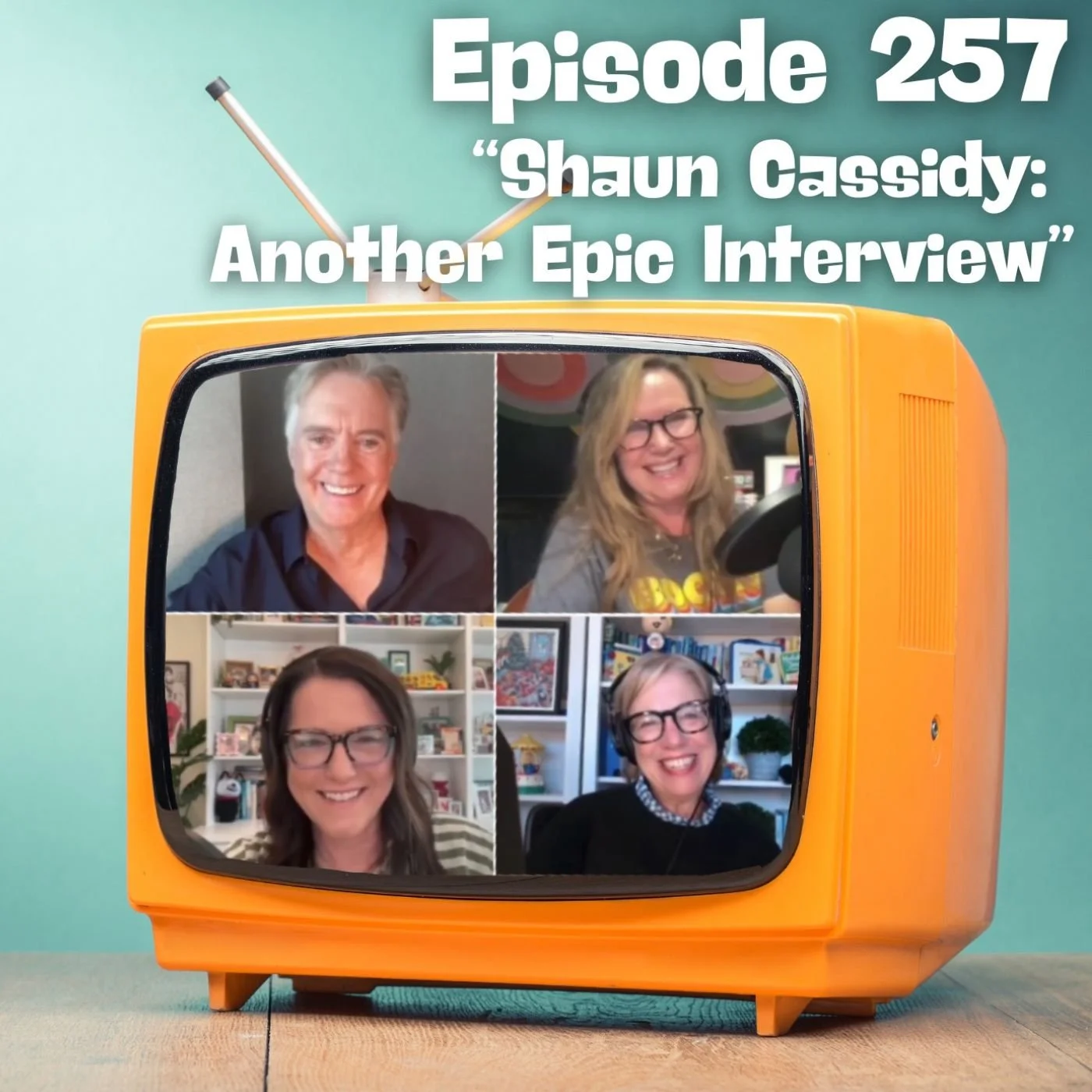
Kristin Nilsen 0:00
Sean, hello, listeners. Before we begin, we have some important information for you right now our first crush Sean Cassidy is on tour as we speak for the first time at this scale since he performed at the Houston Astrodome in 1980 and we are here to tell you that it's 100% worth it for you to see this show. You can get tickets by going to Sean cassidy.com and here are just some of the cities where you can catch the show, Atlantic City, New Jersey, Madison, Wisconsin, Kirkland, Washington, Salem, Oregon. There are shows in New York and Connecticut and California. And for our Canadian friends, you can catch them in Vancouver and Toronto.
Carolyn Cochrane 0:36
And that's not all you guys. You can see all of the cities where Sean will be performing by going to Sean cassidy.com and thanks so much for joining us today. Please enjoy the show.
Kristin Nilsen 0:48
I literally love every word that comes out of your
Unknown Speaker 0:50
mouth. You're welcome, grasshopper. Hello
Unknown Speaker 0:58
World. It's a song that we're singing. Come on, get happy, bringing we'll make you happy.
Kristin Nilsen 1:13
Welcome to the pop culture Preservation Society, the podcast for people born in the big wheel generation who gave a hoot and did not pollute we
Michelle Newman 1:21
believe our Gen X childhoods gave us unforgettable songs, stories, characters and images, and if we don't talk about them, they'll disappear, like Marshall will and Holly on a routine expedition.
Carolyn Cochrane 1:32
And today, we'll be saving our favorite Hardy boy and checking in on his first major national tour since 1980 in a conversation with America's favorite first crush, Sean Cassidy. I'm Carolyn,
Kristin Nilsen 1:46
I'm Kristen,
Michelle Newman 1:47
and I'm Michelle, and we are your pop culture preservationists, if
Unknown Speaker 1:57
the music is
Kristin Nilsen 2:15
it's at the pop culture Preservation Society. We are in the business of talking about the past, but we don't live in the past. We have fun poking into all the corners of the past and bringing it into the present so we can figure out what it was doing back then and what that means for us right now. And that makes our guest today an especially important one, because there is no underestimating his importance to our past selves, our 10 and 12 year old selves. Seriously no underestimating, but by the grace of all that is holy, we have crafted a life that includes him in it today and his current self, though it is vastly different from his 1977 version, is just as thrilling to us now as he was back then. Our theme today is then and now, and our very revered guest is a very grown up Sean Cassidy, I will never get tired of saying, Sean Cassidy, welcome to the pop culture Preservation Society. Thank you.
Unknown Speaker 3:13
Thank you very much. Past and Present.
Kristin Nilsen 3:16
Me so glad to see you.
Michelle Newman 3:18
Yeah, it's so nice to see you. So the theme of then and now, like Kristen said, applies to you in a big way, because in the midst of your very busy and successful career as a TV writer, you are currently on the biggest tour of your adult life. It's 50 plus shows all over the country. It's something you haven't done since you left the stage of the Houston Astrodome in 1980 and made the decision to pardon the pun, but it fits here. Walk away.
Michelle Newman 3:54
You are no longer a teen idol, but you are performing almost all of the same songs for the same people who were at the Houston Astrodome when you were one and another, but, and this one's a big one, you are intentionally not replicating the show you gave them back then, because you're a different person, and so are they, yet at the same time back Then, has to figure into this equation, right? And it seems very complicated. Or is it?
Speaker 1 4:29
It's not complicated at all. Great. It's here's the truth. From my point of view, I'm not caring the past. When I walk on the stage at all, I'm purely in the present and purely in the moment with these audiences who, yes, many of whom are former kids who were at my concerts back in the day. But there's actually quite a large percentage now, surprisingly, of people in their 20s, because. The Hardy Boys has been on peacock and YouTube and other places for a while, and there have been people watching the Hardy Boys for like, the last five plus years come, and they see this guy looks like Joe Hardy's dad. They seem to like the show a lot, too. And what happened for me? Because, as you said, I stopped doing this at 21 I mean, I stopped doing I wasn't doing this, but I stopped being on a stage singing pop songs. Not that I didn't like doing it. I love doing it, but I found that the life a writer producer afforded me, terms of my personal life, was a much healthier life and a life that was more important to me than being in the public eye. In fact, I didn't love being in the public eye. I didn't like being chased around by paparazzi. I didn't like being in the tabloids. I didn't like the lack of privacy. I didn't really love being famous, and I was very happy to be the driving force creatively behind a lot of television shows for 30 plus years, and not be as famous, or, you know, formally famous, or whatever I've been, and have a life. Because if we're not doing it to have a good life, why are we doing it? Right? So I got that I'm a happy ending, and in my first act does not always end well for a lot of other people. So I feel very grateful about that, but the fact that I could go at 60 and look at the life I've had, and look at the life I'm having, and more importantly, look at the life, explore the life of this audience that has grown up with me and find a connection, a universal experience to share in a theater with songs that they may know, hit songs, old songs, new songs, family songs, songs from my mom, my father, a few new songs from me, but most importantly, be able to weave it together with story, because that has been my job. I'm a storyteller. That is how I've made my living for 30 plus years. Feels like the most fulfilling and authentic thing I could be doing right
Michelle Newman 7:14
now, you're five months in, right about five months in,
Speaker 1 7:18
I'm I think four months in, yeah, this is the biggest tour by far I've ever done in my life. I never got to do a tour like this when I was 20, because I was doing the Hardy Boys, I was recording at night, and I couldn't commit to six months of doing a tour,
Carolyn Cochrane 7:33
yeah, and it had to be a little bit, I mean, I would think scary, because we talk often on the podcast, amongst the three of us that launching this podcast in our 50s meant really stepping into something that was new and scary and very public, much like you deciding to return to touring in your 60s. And so I'm curious, Carolyn, is when you made that choice, did you have any fears or doubts or think should I be doing this, and what advice to our listeners? Because I think we're all learning that we all still have some real value and something to offer, and people want to hear what on the podcast, what we're talking about, and people want to come see you. So what kind of advice or wisdom can you share about your decision to do this, what your fears were, and how you got over them?
Speaker 1 8:22
Well, I'm older than all of you, and the fact that you're saying, the fact that we still have something to offer, I hope you have something to offer 100 I promise you will
Michelle Newman 8:31
we do too. It's
Speaker 1 8:33
something that none of us have right now, which because none of us are 100 but you know, there is the lie of our culture is that the most important stuff we're doing is when we're in our 20s and our third it's a joke, right? It's literally perpetrated by people like Henry Ford, because you were younger and stronger on the assembly line, and we're better for the company, but we're going to give you a gold watch and send you packing at 55 because we want those young, younger
Kristin Nilsen 9:00
fingers. I'm writing this down.
Carolyn Cochrane 9:03
So true.
Speaker 1 9:04
It's just true. It doesn't mean that I'm going to be as good at at 60 as I was at 20. Doing some things, I had a better chance of playing second base for the Yankees at 20, not that I ever would have done that, but I would have loved to, but I didn't have the skill set, but that is far less likely now, but I just finished writing what might be like my 60th pilot. I've written a lot of pilots, and I wrote it with an ease and a confidence and and I think a level of quality that I never could have approached at 25 grateful for that, and I'm doing a show that I never could have done at 25 now, this show is better. I mean, it's different. I'm not it's not a screenathon at Madison Square Garden, but having 1000 people in a theater, theater here. Hearing what I'm saying and responding, and actually knowing me in a way that they could never know me when I was a poster on their wall is really gratifying. And guess what? I get to know them because if they're responding to a story, and I know you guys know this, you've seen the show, but more importantly, you're talking your your show, your podcast, is dealing with this in almost everything you're talking about with an audience, but the idea that you in your 50s should like, Go, what is my value? Now, right? It's really ridiculous and it but it's why I learned early, because there's no precedent for teen idol becoming television writer producer, and people told me that, well, you know, you can't do that. Well, you didn't go to writing school. No, I didn't go to teen idol school either, but I became one, and I didn't set out to be a teen idol. I set out to be an actor. I set out to be a singer. I was in a punk band at 15 right and earring and shirtless and doing my IgG pop impersonation on Sunset Boulevard. And then I got cast in a television show where I was playing Joe Hardy as all American as apple pie. So I wasn't going to be wearing an earring anymore, and I wasn't going to be singing songs like I'd been singing before. So I'm stepping into another role, right? It's all storytelling. It's all storytelling. And the story I told myself when I was playing the Astrodome is, this is fun. It's a very unique experience that very few people are afforded. Don't let it kill you. Don't take it too seriously and go home now and take whatever, you know, money you've made in your youth, and hold it long enough so you can figure out what you want to do with the rest of your life.
Michelle Newman 11:51
Don't you think now too when you were talking about, you know, don't, don't count yourself out in your 50s and in your 60s, and you have so much to offer. And then also, you talking about how this show, you didn't take anything from that, you know, the teen idol days in the past, show this is all new, don't you think, not just for you, but for the audience. It's because you're we're we're all you included bringing decades of experience with us now, no matter if it's you who's now performing the same songs and new ones, or the people in the audience who are watching the person who they had as a poster on their wall, we're all bringing so Much more just experience and fulfillment and wisdom, and we are all we're all different. We all have that same person inside us that we honor. But it's also just because we've we've lived such life from then to now.
Speaker 1 12:56
Yeah, it's for me, it's less than experience and it's more I'm more authentic to who I am on the stage now than I was 20. I trust there's no failure. There's just none. I can embarrass myself absolutely, but I'd be the first one to laugh if I did and and there really is no failure. The failure is not trying. Failure is, oh, I wish I'd done that. The failure is having regret because you didn't try something like, I'm playing the bass guitar in this tour. Okay? I've never played the bass in my life. I taught myself to play the bass. I started about six months ago. I'm never going to be a great bass player. I have no illusion about that. My songs are fairly simple. I stick with the root. I have good time so I can stay and stick with the drummer. That's really the bass player's job. I'm never going to be Paul McCartney playing entirely different bass lines that are counter to what I'm singing, because being a great singer and being a great bass player, that's about the hardest job you can have, doing both well at the same time, but I couldn't find a bass player in my zip code that I wanted to spend six months on the road with. So I have the time. I play the guitar, I play the piano, I'm musical. I'll teach myself. They're on YouTube, and I'm talking to bass player friends, and they're giving me little lessons, and I'm learning my songs. I can't play anything but my song and my feeling is, and this is I've had this intuitively my whole life. So I don't view this like, Oh, I'm 60. What will I? Should I try something now until no, of course, I and I'll do it at 80. It's it's the it's joie de vivre. It's why we're alive. We have to keep discovering stuff. I mean, otherwise, just go to bed and fall asleep on the assembly line and screw the cap on and
Kristin Nilsen 14:50
well, especially in these difficult times, because, and we talked about this briefly just before we came on, this is a very stressful world that we. Live in right now, but we got to pull the light out somewhere, and that's what you're bringing to people out there right now, at these, at this very at this very moment when things are so difficult,
Speaker 1 15:09
there's as much light in the world as there is darkness. Care about the darkness. My little version of really being reminded of this is going out on the road again. I start doing interviews, and I'll do these lovely interviews with well intentioned journalists, and then I'll see the interview, and the lead line on the story will be either the darkest or the most negative thing that could possibly be called from a very positive interview. Why? Because that's clickbait. When you get in, you actually spend the time to read the time to read the story. There's nothing really negative in it, yeah, like an example I did. I was talking, I think people magazine. It was talking about my dad. And I mentioned that my father had, my father was a kid who grew up in Queens, poor blue collar railroad family. He wanted to be an actor. He went to the theater, studied John Barrymore, you know, and ended up developing this sort of minute Atlantic actors accent, you know, before Brando, everybody sort of talked like this, came from where I don't know my father, that's what he grew up wanting to emulate, right to escape his Queen's accent. Cary Grant invented an accident exists. No country ever anybody came from had Cary Grant accent. My father too, and I was mentioning my father used to go on talk shows, and he'd talk about the car being in the garage and the tomatoes home. Money lead in the article, Cassidy calls his father.
Kristin Nilsen 16:48
Come on, get
Speaker 1 16:50
out of town. And my brother, my youngest brother, why did you say that about that? I said I didn't say that about Dad. I talked about him putting on an accent. But this is my point. And you read the story, you know, I love my dad. He was not a perfect father. I totally own that, but I wouldn't trade him. I talk about that in my show too. I got so many great things from my father, magic stuff from my father, but he was not the traditional showing up at the baseball game of the camp out. He wasn't that guy, but I wouldn't trade it for the world. And this is my point. It's like you can't do nuance in in social media. No, you can't. And frankly, they think it's boring, right? You know, I gotta, I got a tumultuous life, but my ending is happening. If I die tomorrow, at the end of the story, it's a good it's a win, right?
Kristin Nilsen 17:43
And that's not all that exciting. And your your show, I think, is exemplifying this, because you just referenced your dad and and how he wasn't a perfect man, but you got so much good from him. And so you can sort of say that is the entire motif is that you're being very honest. You're not pretending that bad things didn't happen. But this is a joyful show, right? And I think that's something that we could all very funny show.
Unknown Speaker 18:09
I mean, people don't know that I can hit a joke, right?
Kristin Nilsen 18:12
Okay, here's one of my favorite jokes from your show, and I'm not going to tell it well, so you're going to have to, but we're going to get serious for a second. But it's also super funny, because you do this so well. You talk, you joke about how you came to a mutual agreement with your fans, and how you agreed to stop making albums and they agreed to stop buying them. I whiffed the joke. I didn't do it because I'm not Sean Cassidy, but what I want to know is, first of all, thank you for being honest about your feelings. And so what did that feel like to you back then? But then let's fast forward to the future, that moment when you're realizing that, I guess they're not buying my albums anymore. What does that mean to you now?
Speaker 1 18:54
Well, it all is a gift on reflection. You don't know it necessarily at the time. Look the if anybody's going to call you a teen idol, you know, you've got a short shelf life, that's true. It's just, just the nature of the beast. You turn 20, you're not a teen anymore, and they're going to get older in eight seconds, and they're not going to be wanting to go to the, you know, pray at the doorstep of a teen idol, which is fine, normal, healthy, appropriate. So the question the person who is in that and then that's has to ask themselves, and I did, is, do I want to try and work to transition to become a quote, unquote adult performer? Do I want to Frank Sinatra my career? Do I want to Justin Timberlake my career? Do I, you know, pick an example of somebody that's transcended their initial kids success in whatever it is and move forward? Or do you want to step out of that arena completely and try a different one? And that's what I want to do. Do, because people find it astonishing. They asked me all the time, you had a number one record as your first record, didn't you want another number one record? And it's like, not really. I mean, it would have been nice. I had four top 10 records. That was good. But the thrill of having a number one record is only one time you that you did it right? It's fantastic. It's amazing. It's like winning the lottery. I felt I had very little to do with it, but it happened. So great. Hey, guess what? You're opening the Grammy Awards. Amazing on Beyonce this week. Fantastic. Great, great night. One time thing. Maybe I can open the Grammys again someday, but I've already opened the Grammys, so it's not going to be the novelty, it's not going to hold the thrill it once did. That's pretty much how I felt about everything, everything. I mean,
Kristin Nilsen 20:50
even at the time, I felt that way at the time too, television shows
Speaker 1 20:53
and worked on many more. None will top American Gothic. It's the first one. It was the most really, it's all new. And that's what I'm saying, is like you guys came to that little thing I did at that little winery in builton, the first time I stepped on a stage in 30 years post Broadway to do anything. And I didn't know if anyone would come, 120 people in the room, whatever. But it was new and different. I could tell stories. People want to hear stories. Well, at least they shut up and sing. Did you run? Run? I didn't know, but they didn't. They loved the stories. People told me they I mean, they were happy I sang the songs, but they loved the stories, and they were moved by them, and they laughed at them. And yeah, that was about as willing as you can imagine. And it remains,
Carolyn Cochrane 21:44
you alluded to this earlier, and it really, it really struck me. Because what you are truly in, at least in my opinion, is a storytelling magician. If I can lump that in, is that you create magic, I can say because I was a beneficiary of it. And look, I'm probably going to get teary at this, but I was listening to the last song on my run this morning, and I remembered
Kristin Nilsen 22:08
the last song being sorry. I have to interrupt the title of a song. She's not saying the last song, the last title of a song, which is a new song by Sean Cassidy, correct?
Carolyn Cochrane 22:16
And it's wonderful, and he sings it on this tour. And when you experience that with the friends that you have gone to this concert with and all the other people around you, it it's there's no word for it. So that's why I'm going to call it magic, because you feel there's this energy something happens to you. Sorry, everybody, but, and I was tearing up on my run today that
Speaker 1 22:42
you I teared up when I wrote the song
Carolyn Cochrane 22:46
you created with the words and you singing them and the people there that cannot happen by just playing it on a rate, like having that collective experience that you, I don't know, like you tinkered with and you made all of these pieces line up. There are no words, and that, to me, is the light like, that's why we're here, is to have those experiences with other people, and you're like, the conduit to make that happen. And and I thank you really, truly, because those are the moments that I'm thinking, that's why we're here. These exist. I'm going to seek them out and wake up the next morning with a smile. So there you go.
Speaker 2 23:22
If this is the last song I write, I'll leave you with these words tonight, before we face the mystery, let's kiss the clouds. Make history, tell our story loud and clear, leave our mark on every year. Raise our voice, take our stand, plant our flag in
Speaker 1 23:49
the promise. Carolyn, I really appreciate you saying that, but it's not unique to me. You all do it. Everybody in the audience can do it in their family, at their workplace, in the on the street, it's, it's, it's alchemy. It is because we are all, we're not unique. This is the lesson I've learned over and over again. We all have different experiences, we think, but kind of, even there, it's not really the case. We're all kind of, you know, it's the feeling, the feeling, the feeling, it's you don't remember the words of the show. You remember the way you're feeling. And I, I wrote the last song. I not the last song.
Carolyn Cochrane 24:33
Praise God,
Speaker 1 24:35
my wife, I said, I'm thinking of writing some new material for the show. She said, nobody wants to hear any new materials. Really, what if it's like the last song I ever write, at least I'll be able to say I did it. Oh, that's dramatic, she said. So I went off and wrote a very dramatic, theatrical song. It could almost be a Broadway song, or it could be a song by the. Killers, any kind of anthemic band, current band, and it's, it's sort of a timeless song, I think, I hope, and it's a thank you note and a love note to the audience. It's really, it's just like, Isn't it amazing? We're all here, and we're, you know, reaching for the stars. And thank you. Well, thank you. But I couldn't have written that song had I not gone and done some of these shows. I didn't write it before I started doing this. I did it after I was doing this because I realized I'm short a number here. I don't have a song in my old repertoire to it basically closes the show. I mean, I sing to do run, run afterwards, and now I do a little something from the music man, of thanking my mom and Till There Was You as the intersection song of everything I've ever been inspired by musically, because I had the Beatles and I had the Music Man soundtrack as my first two records, different story. But the last song is really the culmination of the show and and the message in the last song and the tone of the last song is Something I discovered from the audience by doing the show.
Speaker 3 26:20
This dance like this is
Unknown Speaker 26:36
the last song I recorded,
Speaker 1 26:38
a song called my first crush as well, which is a brand new song written to sound like a song from the 40s, another great one, yes and, and it's about that crush feeling that is timeless that I have with my wife and and I've had many times as a young guy with other people. And, you know, people say I was their first crush. Well, great, let me, let's look at that, because the crush is often dismissed as sort of a temporary, frivolous, you know, whatever. But I think, I think the feeling is timeless.
Kristin Nilsen 27:10
The song, you're right, it is, it's it's a very, very timeless song. It's almost like, well, it feels like a tribute to your your former self. It feels like a tribute to us, because it's a tribute to all of our first childhood crushes, and it is almost a plaintiff celebration. If that, can you put plaintiff and celebrate together? I'm not sure, but it feels like a plaintiff celebration of the importance of one's first childhood crush, and we think it really exemplifies what we talked about in our first interview with you in May of 2023, this was exactly what we were talking about, how it's not you just said it, it's not trivial. It's a milestone in our life. And you are our practice boyfriend. We needed you so that we could learn how to be in love. And we're all doing really, really well, I gotta say, but we're not we're not alone in this we have this song everybody. I'm just gonna repeat it. Sean Cassidy has new songs to go listen to them. So there's the last song and my first crush. And we are not alone in these thoughts, because we have been hearing from people who love this song, and they have heard you introduce it in your concerts, and they remember what you said in that interview. They remember, especially when we're talking about my book worldwide crush, if you're new here, that's my first book, which the themes essentially align with this song. Tell us about a little bit more about my first crush, like what, what has been people's response to it,
Unknown Speaker 28:39
to the song, or the wine. Oh,
Kristin Nilsen 28:42
there's that too. Okay, first the song, first the song, and then tell us about my first crush wines.
Speaker 1 28:48
Well, the wine existed before the song, but and my first crush as a title existed before the wine. And here's, here's the full circle on that. And people have been coming up to me for many years saying I'm their first album or first concert, or, yes, my first crush. And that's very sweet and often embarrassing, but I started thinking about it, and before the pandemic, I was working on a show for Las Vegas called my first crush. That was a show that I was going to write and produce. It's a book show, like a show that just lives at a hotel somewhere, and all of that went away when the pandemic happened. So I trademarked my first crush, and then a very dear friend of mine calls winemaker. We live in the wine country of Santa Barbara. Know a lot of winemakers. This guy, Steve Clifton, is one of the best. He called me said, I've got 500 cases of this export extraordinary Pinot Noir that he had made for these high end restaurants across the country, and all the restaurants are closed now because of pandemic. He said, Do you know anybody that might want to buy it? And I said, Well, I buy it, but I'm not in order to put 500 cases of extraordinary Pinot. More, but maybe I can help you sell it. So I called No Kid Hungry. They're just great, great people there. They do great work. You give them $1 $1 goes to a kid's lunch, right? So I called him, I said, I might put a label on this wine and sell it, like off my Facebook page or social media. Whatever would you be interested in, like, taking some of the profit and using it great. So I called Steve. I said, Okay, I just trademarked my first crush. Coincidentally, it's a great name for a line. Let's put my first crush. And I went and wrote a bunch of labels. I wrote, like, 100 my first crushes until I got the good one like, and that became the label. It's my handwriting.
Kristin Nilsen 30:41
Oh, my God, that's your handwriting. Yeah,
Speaker 1 30:43
so if you like wine and you want to help out a kid and help out uncle Sean's labor of love project, anyway, there's my wine plug. Like, back to my first crush. The full circle is, I'm not on the road now doing these shows. And so many people come up and say, first album, first concert, first crush. And I see the look they get, this little face that like I've seen on the 12 year olds at Madison Square Garden in 1979 and it's so sweet. And I'm talking about so I don't when I went on Oprah the first time. And I have girls, I have I have sons too who have crushes on women, but the little girl face, when my daughter went to Harry Styles concert came home all like on a cloud the Harry Styles poster up over her bed, and my wife said, you know, that was your dad For a lot of people. What that guy? Yes, no, a guy in the robe in the kitchen. How is that possible? The feeling is transcendent, and it and it's to be cherished. And I have a crush on my wife, my wife. Every once in a while, I'll get, I'll see her. I'll sitting across the table from her beautiful or not, in the morning in a row. But whatever it is, I'll get hit with this feeling that's like a crush feeling, not like I'm grateful to be her husband. I Love You, know, sharing your life with but I'll get a little crush thing, which I had for Julie Newmar when she was the Catwoman on Batman in 1967 so this is a feeling. This is a real deep thing. And I was looking for a song to sing about. I couldn't find one, so I wrote one and and I wrote it to sound like a timeless song to equate with the feeling it sounds like a song Mel tour may might have sung not getting cold
Carolyn Cochrane 32:47
Exactly. My
Unknown Speaker 32:49
first crush is a funny thing, a sweet, familiar reckoning
Speaker 2 32:57
of what was once and suddenly is now a feeling. That's forever, that I can't disavow a Teenage Dream. So it would seem
Michelle Newman 33:14
It's a great song to listen to, listeners while you're drinking a glass, explaining a bottle of my first crush. No, it really is. That's the type of music I love to put on in the evenings when I'm making dinner, if we're just going to have some wine. And it's that it's just a beautiful not only are the lyrics beautiful, but just the whole song is beautiful. I want to ask you a fun then and now question, what is your favorite song to perform right now? Like tomorrow night, like, might change all the time, and is it a different favorite than it was in 19, like 79
Speaker 1 33:52
yes or no, it changes night tonight. Yeah, because it's like you're sort of riding the wave emotionally with the audience and kind of where they are is, you know, the power of a particular moment is going to land on them. Or if you've passed that moment already, so this will have more power. Or I'm in a different place emotionally, like, also it depends, like, when my wife is in the house, like, I just added a new song two nights ago to the show that I'd never done.
Michelle Newman 34:24
Darn. I mean, yay.
Kristin Nilsen 34:27
What did you add? What did you add
Speaker 1 34:29
here, there and everywhere? By the Beatles Paul McCartney song, but it's one of the most beautiful songs that McCarty ever wrote, I think, and it was Brian Wilson's favorite song that he wrote, and God Only Knows was McCartney's favorite song that Brian wrote, and Brian wrote a song that I recorded, that he gifted me with, that's in my show. McCartney and Brian Wilson both certainly melodically, are the greatest inspirations in my lifetime, musically, but I have. This very long story about how I met Tracy, my wife. It's so funny, yes, funny and it is tragic, crazy and it's really like a movie. It's an art. Yes, you know, the first thing I say when I walk on the stage is, this is a love story. The whole show is a love story of all the variations of Crazy, Stupid Love. My friend Dan Fogelman wrote that movie. It is Love is crazy and love is tragic and love is funny and love is universal and love is aspirational, and love is a kid poster on your wall and a crush on a woman named Dini in a movie called Splendor in the Grass that Eric Carmen had, and he wrote Hey Dini as a result. And it's the journey shared with the audience and, and it's all of that's a love story, our family love story, right? And, and I'm talking about variations of that in some form throughout the entire show. And I realized I have this very long story about my wife, and then I just didn't sing a song. I just went right into thanks for coming. And here's the last song, right? So I thought I need a song that is about us, my wife and I, and I didn't have one, and I was, you know, I could certainly have written one, and I have written, I've written a lot of new songs, but I here, there and everywhere. It's just the most beautiful song, and it tied to the story.
Kristin Nilsen 36:29
That story is a good example of something that really connects the audience. It really connects you to the audience. And we feel like we're right there with you. We're getting we're getting to hear about your life, and you're very authentic, and you're very vulnerable about it, and it really makes us feel like a collective we're all in this experience together. And at some of your shows, you have Q and A's, and you take questions from from the audience, and I'm just and it's thrilling for them, because they get to connect with you personally. And I'm just wondering if there are any interesting questions that people have asked you. Do you have any favorite questions that people have asked you? Any any other stories that you've been able to share with people because of what they brought to the show?
Speaker 1 37:10
Well, I get asked interesting questions every night. I don't actually do a Q and A in the body of my show. Now, I might have done it at some point. I like doing it, but I now do it before the show. The quote, unquote VIP ticket buyer, like 50 or 75 people, they buy these, you know, the equivalent of a meet and greet. I think it's better than a meet and greet, because I did those when I first started, and I didn't like them because they were like, like, the assembly line. Hey, nice to meet you. Picture next. Nice to meet you. Picture next. I didn't actually get to connect with anybody, and so I said, Let's do a like a half hour, 45 minute pre show, like an hour before the show starts. Come on in. Ask me anything you want. Don't be shy, really. Ask me anything. I might not answer you, but I probably, I probably will, and I do and and the people, to their credit, don't just ask me what's my favorite color. You know, do you still hang out with Parker Stevenson? They do ask me that I do hang out, but they asked me interesting, thought provoking questions. And I get to think, and I actually get to discover something often. And I don't think I have a What's your best question answer, because I've had so many, but I love that experience now, and I didn't know if I would. In fact, I was afraid it might kill the surprise of the suspense of the show, you know, but actually, it's like a nice warm up for the show. And now I've met 50 or 75 audience members who I already have a connection with before the show begins. I feel like I know them a bit by base based on what they've asked me, or they tell me where they're from and or why they're here, or what I've meant to them, or whatever. And I get to share stuff about my life with them, and my life's different every day, like our son's going to Indiana University. He's going to be a Hoosier, right? So when I played Indiana, I went to the school, and I went to the Student Store, and I bought their red and white striped pants that all the kids wear, yes, and I wore it in the show. I walked out on the stage in shipswana, Indiana pants that looked like Steven Tyler might have worn an Aerosmith, and they went crazy. So this is a life experience, personally that I'm now sharing with the audience, and they're enjoying and many of them are Hoosiers, or had kids, or they don't even need to have been a Hoosier. You got a kid who went to college talk about that too. It's so hard dropping your kid at school and coming home and finding a little empty room and their toys? Yeah? Man, it's yeah. It's emotional,
Kristin Nilsen 39:49
yeah, and you share that with us. And when we were in the Q and A, I was my heart just swelled with the number of people who asked questions, not about you, but. About your mom. I and apparently the world does too. Apparently.
Michelle Newman 40:07
I mean,
Speaker 1 40:10
I think half the people who like me like me because I'm Shirley's son. Yeah. I mean, my mom is like this. She's extraordinarily beloved person, yeah, and, and she lives five minutes from me. She's 91 great health. Looks beautiful about that all day, and if I got, you know, a quarter of that from her, I'm the luckiest man alive.
Kristin Nilsen 40:39
That's so she will love her. People love Shirley Jones. I want to ask you another Then and Now question. This is, this is a toll Kristen question. So going back in the time machine, I was so fascinated with the born late album. I had all of them, of course, but born late was the one that I really connected to. And it was not just the songs, it was it was the album cover, and it was the the photographs that were displayed on the inside of the of the album cover as well. And if I think about it now, that born late album had a very Then and Now theme to it, when I think about all the photographs, and you can I don't, maybe I have to describe it. Maybe you
Speaker 1 41:18
don't remember, but I'm the one who curated that album cover.
Kristin Nilsen 41:22
That's what I'm wondering. Okay, tell me about the pictures. Tell me about the theme, born late. Why is it called born late? And what do those photographs mean to you? Why did you choose those?
Speaker 1 41:33
They all meant something thematically and personally. There's a young woman, beautiful young woman, holding up a table tennis racket. One of the photographs that's Ruth Aarons, who was our family's manager. She managed my mother and father, then David, then me, and she was like an aunt to me. Growing up, Ruth had been the women's table tennis champion of the world in the late 40s, and she was a beautiful woman, and she ended up becoming, kind of like a pop culture figure. Ended up doing a nightclub back in New York and singing, and they made comic books about her, Google her, Ruth H Aarons, okay? And then she was, you know, pioneer in terms of a woman in show business being in a position of power, she was formidable. You don't become the woman's table tennis champion, and I wouldn't be here without her. So she's on the album cover the original Hardy Boys from the Walt Disney Mickey Mouse Club. Tommy Kirk and Tim constadine are on the back of the born late album. Most of the kids by my record probably didn't know who those two boys were, but I'd watch them as a little little boy in reruns of the Mickey Mouse Club. Ed Solomon is on the back of that, I think because he introduced the Beatles. And the Beatles was the moment I saw the Beatles, like 8 million people went, I want to do that. That's the job I want. I didn't know I'd actually have a variation of that job someday, but I did. Clark is on there. American Bandstand had been sort of the through line introducing every musical act for 40 years, and I've been on bandstand with him. My parents, dad are on the back there as a young couple. Who else? Oh, I think there's like a bomb shelter or something cover. I don't know if you guys are old enough when I
Kristin Nilsen 43:41
there's a JFK Is there a JFK picture? I think there's a JFK picture.
Speaker 1 43:46
Seminal event in my childhood fascination, you know, the end of the 60s, and there's a photo of you innocence as a little boy for me inside. Little boy at a piano. There's a little little boy I would go to the piano to work through stuff. You know, it's where I I would process keyboard. Keyboard, later became a computer keyboard writing, but I couldn't figure it out in my head. I'd have to process it through my heart, and the way to do that was through music, at a computer, at a piano, or through story.
Kristin Nilsen 44:29
Wow. And what does born late? Mean
Speaker 1 44:33
it's me. I was an old hole. I always felt like, first of all, the music that I loved was from the early 60s. Okay, in the early 60s, I was like three. So why did that music resonate more for me than music of the early 70s, when I was a teenager? I don't know why, but I love the music of Phil Spector. I remember being in kindergarten on a school bus listening to. To do, run around and, you know, certainly an easy song to sing along with when you're five or six. So it was my idea to record it when, you know, when the producer said we're going to cover some oldies, I said, here's one. Let's try this one. I loved, I love all the music of the 60s. I love the Beatles and The Beach Boys and and the transition music made from the early 60s to the end of the 60s is so dramatic you can't find another decade like it.
Carolyn Cochrane 45:33
And I just want to comment too. We talked about this on the podcast. But can we just have a moment for a really good album cover and a really good album, like all the things you just told us, and how much thought you put into curating what that was, we don't have that anymore.
Speaker 1 45:51
One of my dearest friends is Bernie Taupin, and Bernie, as you all know, is Elton John's lyricist for over 50 years, and one of the joys of my life, and I've told him this repeatedly, is buying a new Elton John album, sitting down reading various lyrics, Yvonne wears his war wound like a clown. He calls his child Jesus like a crown because he liked the name. I mean, that was as much a part of the journey of the music as was the music 100% and being denied that. Now, I mean, I love the lyrics to the two songs you kindly mentioned that I've written recently. People might hear them in singing, but I'd love them to be able to read them.
Carolyn Cochrane 46:37
Yeah, just so, you know, I did print them a lot, yeah, yeah, because I loved, like you were just saying when lyrics were in an album, I felt like I knew something. I was like on the inside, like I now know what these words are, and I know who wrote them. I mean, as we talk about, like we could find out who the session musicians were, and sometimes their stories. It was just a story. It was a story. It was
Speaker 1 47:05
and you got the story of the making of the album, connected by the people there, like, for example, again, tying to Elton and Bernie Davey Johnston. Elton's guitar player for 100 years, played on Hey Dini, and played on, I think, break for the street, played on a couple of my albums. So did D Murray, the bass player. And if you listen to Hey Dini, or you listen to break for the street, it sounds like Saturday night's all right for fighting. And that's not an accident.
Carolyn Cochrane 47:38
That's me. Yeah.
Kristin Nilsen 47:40
It All. It all really matters. You know, clearly I had this question for you, teed up, because that, that album cover has stayed with me for 50 years. So what all those things that you picked out so purposefully, they mattered and they made an impact. So, number one, thank you for that. But we, Carolyn and I had a conversation yesterday. This is my theory. I feel like the explosion of anxiety in our children is partially caused by the by the fact that they don't have these tangible items to ground them. If they had an album to touch and hold and turn over and put on the turntable, I just feel like that could ground them and they wouldn't feel so unmoored and all their music is in that little rectangle you just held up your phone, and they have nothing to hold on to. That's my theory.
Michelle Newman 48:27
But it's everything too. It's a magazine to turn the pages, and it's not That's right, our kids are old enough that I feel like they still, you know, they got that. They still have it. But I'm we're talking about the kids today.
Speaker 1 48:39
Yeah, it's all on the cloud. Yeah, that's what we were talking about. I know that I missed, but I have a jukebox. We have a jukebox in our living room that's filled with all of the 45 that I owned when I was 1213, oh, my God, I used to I would take my allowance. We lived about a mile from Tower Records, and I would take my allowance on a weekend, I'd walk Tower Records, and I'd buy these 45 singles for 88 cents. And my mom, when she was doing the Partridge Family her first season, they gave her a tabletop jukebox, small one. She didn't need a jukebox, so she gave it to me. I got some from like 12 to 1516, I would just fill that jukebox with these records I buy every weekend. And one of the first ones I bought was your song by this new guy named Elton, John and and then my my parents went to see Elton at The Troubadour when he first came to America. And then, like my father was prone to do, invited Elton and Bernie back to the house afterwards. Yeah, as you do, Elton was like 23 and Bernie's like 21 and I'm 1011 and I've known Bernie ever since I said to him. I said, Hey, I got your record. It's like one of my parents going to these CDs pop stars for they're Broadway people. But I had. It's your song. It's a little bit funny, this feeling inside, and I remember the lyrics then being so conversational and so beautiful and honest. And I talked to Bernie about it now and and talk about timeless and full
Michelle Newman 50:15
circle experience. Isn't that crazy? I'm not kidding, so crazy. Well, it's just
Speaker 1 50:19
it all weaves together. I really don't believe time is linear. It's we're experiencing it all at the same time, all the time. You know? You just need to be tuned to it. Yeah, and that's what I feel that. And it's that feeling that transcends anything I could say or write in the room with people. That's helpful. Actually, I see it exactly.
Carolyn Cochrane 50:43
That's what I said. It's magical. And there's not a word. And I've decided I'm not going to try to put a word to it, except to let you know that something happens and you leave there a different person from when you walked in, and your chemistry and your body readjust. I don't know what it is. And again, I can try to
Speaker 1 51:02
articulate it every experience in a theater,
Kristin Nilsen 51:05
yes, yes, yes,
Carolyn Cochrane 51:07
very much. So another kind of getting back to these experiences of, you know, holding something and also being in that environment. And I think it was in Rocky Mount when I saw you in Virginia, that show, and you really specifically called that out, about having these collective moments in a theater with other people around you, and that's different than streaming it on, you know, some device that's this big, there is truly something, I think, happening, the energy and the air that shifts who we are, and yeah, and I miss those, and I was grateful for you recognizing that. And I think that's another reason you say you take this show on the road, because you recognize this is something we've we're kind of losing a little bit.
Speaker 1 51:49
Yeah, we need to hold our our pack animals. We're not supposed to be alone for long. Yeah. And and the isolation created by technology and created by the businesses that would benefit from our being isolated. Yes, is what we have to be wary of.
Michelle Newman 52:11
But I tell you what, as like listeners, going to the road test, going to the show, and being when you talk about a collective experience, when everybody is standing up and, you know, we're scream singing, that's rock and roll. And we're scream singing, you know, hey, Deanie, there's nothing like it. I mean, it's the biggest dopamine hit you get, right? But that's the collective experience, because we're also honoring, it's really cool to go to a show where you get to honor your your you know, eight year old self, 12 year old self, whatever, and your 56 year old self, or however old you are. But you get to do it with everybody else who's doing that too, and new people. You get like you, like you said earlier Sean, you get the younger generation,
Speaker 1 52:56
the 22 year olds I've met after the show come back with the same expression that you came back. I love it. And they were not around for the Hardy Boys first time, and they were not around for the do run around, because they have felt this collective experience in the room that is timeless. Yeah, that's right, and it's not nostalgia for them, yeah,
Carolyn Cochrane 53:18
right, no. It's just joy. There's not a word for it. I don't think you can't bottle it. And the good news is, nobody can take it from us. We Well, I
Speaker 1 53:25
would argue they're more starved for it than we are. Oh, for sure. They don't have any precedent for it.
Carolyn Cochrane 53:31
Yeah, that's exactly right. But they know that, that it's something that they probably have been seeking, or their body needs, but they're
Kristin Nilsen 53:39
not sure it is absolutely healing. I mean, think about how many friends did we make at that show? At the Sean Cassidy show in Burnsville, Minnesota, we walked away with how many new friends. And that's all because of you, right? We're all there to see Sean Cassidy, and we walked away with 10 new friends. It's, it's a beautiful,
Carolyn Cochrane 53:57
beautiful, a lot more in common than we the world likes to make us think sometimes, yeah,
Speaker 1 54:03
well, 99% of what we have is common with everybody else. Yeah, it's the 1% that people get tripped up on,
Carolyn Cochrane 54:12
right? Well, we're not gonna let that happen.
Speaker 1 54:15
VIP, Q and A's. I said, Listen, you're all here. I'm grateful. I don't care about your politics. I don't whatever your religion is, great. I honor your religion. But don't lead with that, because that is going to divide you with somebody somewhere. Lead with your common humanity. Lead with humor. Lead with something because you'll find that you have so much more in common than you don't, you can find 100 reasons to dislike someone if you work real hard at it, right?
Carolyn Cochrane 54:45
Exactly you know. Well, thank you for being that you know one of the ways and reasons that we do gather and remember what we have in common with others that you know we all know the words to do, do, run, run. And I mean, we have our arms around strangers. Dollars. We don't know who they voted for, and at that moment, it doesn't you don't care. Doesn't matter. You know, we all know the words and so thank you for that gift, because it truly is and
Speaker 1 55:10
I take it for granted. Yeah, I really am.
Carolyn Cochrane 55:14
It's all wonderful. It's all wonderful. Well, I've got one last question, in general, just what do you cherish about your past and what do you cherish about your future? Like, what does Sean Cassidy's future look like right now? What's what's on the horizon? Do you know? Do you have a plan, or is it?
Speaker 1 55:35
What is it? No, I don't have a plan. I've never been good with a plan. I'm good at instinctually going, let's do this. I'm a doer. I mean, I get up and make something almost every day. I love creating. I just, I have, I've been doing it since I'm a little little boy, and I love seeing where it takes me, where the creation, you know, leads me my past. I am grateful that I was
Unknown Speaker 56:09
able to get through the early part of my life and take the best from it and learn from the hardest part of it,
Speaker 1 56:18
because we don't know what's best for us. You know, the painful times we often go through is like, Oh, I wish this would stop. And then you look back and go, Wow, so lucky. I went through that. Right, right? Yeah, I'm so fortunate that that happened. I got so much from it. I learned so much, I grew so much. I feel that now it's like, I'm open to all experiences now I'm eager for them new ones. I don't know if I'm answering your question, but I mean, I just wanted to give you the thinking about somebody called me and asked me just the other day if I'd be interested in acting in a thing they were doing. And five or 10 years ago, I absolutely would have said no, 100% No, I don't do that anymore. Now I might, yeah, not because I have anything to prove, not that I might not be good at it. I couldn't be bad at it. In fact, doesn't matter, right? What matters is the experience, not the result. The experience. And I've had that feeling for so long, like my wife gets upset if I write a pilot and it doesn't go I'm like, No, I loved writing the pilot, and I've got this beautiful script that sits on my shelf that says, the end, I did it. Yeah, my show. People didn't see it, but that's most pilots. You know, you know Babe Ruth struck out most of the time, but he was Babe Ruth, we
Carolyn Cochrane 57:44
don't remember that part. And like you said earlier in today's episode, there's no failure. Like the failure was the not trying.
Speaker 1 57:53
Failure is not trying. It's the only failure, because that will lead to regret. Yeah, right. And, and what's the worst thing if I went out and I couldn't sing anymore, people don't expect me to sing. I'm 67 years old, you know, and I was a pop star who knew I could sing the first time. I make this joke about low expectations being my friend, but they always have been there. It's fantastic. People don't have any expectation that you're going to be good. You're going to be surprisingly good. And if you're really good at anything that people don't expect it, you're going to look like a genius. You know? I mean, it's like, so, so what's, what's the downside of trying something? You may look foolish, but okay, yeah, it's like, room not trying it. Yeah, the
Michelle Newman 58:51
one of the things I've said to my girls, who are now 30 and 24 for so long that I really hope they that sticks with them is, but what if it all goes right? Like, that's the attitude we need to have, right? Or, if it's like, but what if they say yes, like, but what if it all, what if it all goes right, you know? And so I think it's just that flip right, but it's also the that's just the failure is in the not trying, because what if it all goes right?
Speaker 1 59:22
The failure has been basing everything on result, too. This is what I'm saying. Because, yeah, success can be as equal as, quote, unquote, failure. Arguably, it can bring more challenges, because success is a harder lesson to what am I supposed to learn from this? And it can also be a period on the sentence of I did it, and now what do I do? So I would say it all has to be about process, the journey, not the destination. It has to be about, am I having fun today? I'm loving talking to you guys, right? It's been an illuminating conversation for me. You asked me smart questions. I come up with answers I hadn't thought. About, oh yeah, that's how I feel about that. I go and teach classes at film schools, and I teach classes. I go and speak and and the people ask me questions that I hadn't thought about in forever, and just coming up with the answer. I relearned something, or I rediscover something, I come away as illuminated, hopefully, as the kids are, and that's how I feel about doing this, you guys are really good at what you're doing. You're asking really good questions. I get to have a great experience with you. Hopefully people watching it, enjoy it and have fun. Take something away from it that's beneficial for them. It's all good. If you have 10,000 people watch or one person watch I can't control No.
Carolyn Cochrane 1:00:43
Well, that's and that's what Kristen and I said
Unknown Speaker 1:00:47
ever or it's sort of number 427 Yeah, right. I'm good either way.
Carolyn Cochrane 1:00:53
It's how we define success.
Michelle Newman 1:00:55
I was about to say that too. Yeah. First of all, thank you very much for saying that. That's very kind of you and two, we're over five years now into this podcast, and we all three really feel that's, that is how we measure our success. Is not about the end result. It's not about, Oh, do we have, you know, X amount of sponsors? Yes, it would be nice if we, you know, made some money or had sponsors. But it has, from day one, has been about the process of this, and been about the enjoyment of it, and been about the connection with our listeners and our our followers on social media, who you know are just finding a lot of joy in these memories. I really appreciate that you you you can see that with what we're doing, because it's been really important
Speaker 1 1:01:41
to us. I feel it. I feel it, by the way, and that's one of the reasons I wanted to do your show again. And thank you. You don't know what gifts are coming, because, again, we like write the script for ourselves, like, if I do this, maybe this will happen and that will be a success. We don't know who you're going to meet along the way that you end up being taken down a road you didn't anticipate, and we don't know what's best for us. We just don't know you know. So experience, go out and experience, see what happens.
Kristin Nilsen 1:02:12
Yeah, I feel like this episode should be called Lessons from Sean Cassidy, okay,
Unknown Speaker 1:02:18
here's my great parting lesson. I don't know anything.
Michelle Newman 1:02:24
Sean Cassidy doesn't know anything.
Michelle Newman 1:02:31
Sean Cassidy knows nothing. He's a fraud. And then we'll get people to click on it. Yes, excellent idea.
Kristin Nilsen 1:02:37
But this is why we love I mean, it's, it's, it's the it works both ways. We We love having you on because we learn something from you. The first time, it was about, oh my god, it's Sean Cassidy. But what we learned in that first interview was that, oh my god, this guy has lessons for us. We need to listen to the words coming out of his mouth. And so the eagerness, the reason that we're so excited this time around is the different reason from the first time around. Thank you. Thank you for coming on. Thank you for being with us. Thank you for sharing your thoughts with us. I literally love every word that comes out of your mouth. You're welcome, grasshopper.
Speaker 1 1:03:19
You all and I appreciate your audience and just stay teachable. That's our job here, to stay teachable.
Kristin Nilsen 1:03:38
Okay, so that was fun. How do you guys feel after your second interview with Sean Cassidy,
Carolyn Cochrane 1:03:43
I think Carolyn has got her face in her hands right now. I do, you know what I have? I'm gonna have to go to my journal and really process this. He gave us so many things to ponder, and also they were just such a reassurance. I feel so uplifted and hopeful after that conversation. I really do, really do it.
Michelle Newman 1:04:01
Just, you know, more and more the more we were so, you know, fortunate to get to spend time with Sean Sean, I want to say Sean Cassidy, but I remember that first, that first one, when he was laughing, like, you guys, I have one name. I can't stop. I can't more and more. I do just feel it's just, it's a great conversation with a friend who is giving you, I would say, reminding us, yeah, of just kind of why, like, why we're here, why, what to do. And also, he does a very good job, just in his manner of speaking, and his thoughtfulness, and the words He's the wise words he's saying, of calming Michelle the F down in this current climate, he did. He did in 2023 I had no idea I was still going to be needing to really absorb his words in 2025 but 26 let's say 2026 but for me, I just feel like. Like I want to say, you know, thank you for more than just coming, I think we did, but for more than just coming on the podcast. But thank you. Thank you for your words and for the reminder of so much. You know,
Kristin Nilsen 1:05:13
well and calming in more ways than one. There's that calming, but just he is a very calming presence. He is. You know that the anxiety that I'm talking about, where we don't feel grounded. He's a grounding presence. He speaks deliberately. He thinks very hard about everything that he says. And his countenance in, you know, the little square on my laptop screen is one of we can do this, people, you can do this. Just everybody, hold on and it's gonna be okay. And it's just an aura that he has about him that is so grounding and calming. And it made me also very inspired to you know, you have bucket lists of people you want to see in concert. We spend a lot of time talking about his new concert tour, and I don't really have anybody that I've seen in concert multiple times. It's sort of like that was great, and then who's the next person? But I am now inspired that this is a concert that I will see whenever it comes near me, or maybe I have to get on a plane to go see it, because it is this sort of connection of our experiences in one big room, sharing stories with this man with such a calming presence, with this music that we all loved when we were growing up. This is a concert I'm going to go to again and again and
Carolyn Cochrane 1:06:25
again, yeah. And it evolves. I mean, that's it, the way he says, yeah, the songs change, and he kind of, you know, molds it as his story changes and grows. And I admire that. And yeah. So it's never really the same show twice. It's not like, oh, a
Michelle Newman 1:06:42
repeat, nothing for those of you listening, don't forget, like, if you've just listened to him, and hopefully, and I'm assuming, you got that same feeling that we're all just talking about. But don't forget, you can get that by going to see one of his shows. I mean, he's touring till, I think, the end of March. So, so well worth it. Like, you know, we've talked about it before, we talked about it again today with him, but just, it's funny, it's everything. It's funny, it's poignant, it's soul filling, it's everything. So we, we can't encourage you enough to, you know, if you're going to spend money on something in 2026 to put a positive spin on this year, right out of the gate, find where he's. Find a city that he's still going to, that you've always wanted to go to. How about mine? You can if you can go see him.
Carolyn Cochrane 1:07:35
And we'll add link to his shows in our show notes and in our Weekly Reader. So you can click right on those and see where he is and how to get tickets and all that good stuff.
Kristin Nilsen 1:07:44
And here's my here's my suggestion to all of you, before we sign off, grab a pen and grab a notebook and jot down some of the things you learned from Sean Cassidy today. Is there anything that you'd like to incorporate into your day to make it a little bit lighter, to make this world a better place? Thank you for listening today, and we will see you all next time.
Michelle Newman 1:08:02
And before we go, we want to say a sincere thank you to our Patreon members. Your support truly means the world to us. You help keep this show alive. You believe in what we're doing, and you're part of this community in a way that feels a lot like the old days, sharing stories, memories and moments that shaped us. We're so grateful you're on this ride with us, and from the bottom of our hearts, we thank You today we're giving a special shout out to these patrons. Tony. Hi, Tony. Jennifer, Karen, Cynthia, Nancy, Erin Marsha, Michelle, Dana, Mary Beth, Kim, Lisa Donovan and MP
Kristin Nilsen 1:08:43
in the meantime, let's all raise our glasses for a toast, courtesy of the cast of Three's Company. Two good times two to do. Ron Ronnie,
Michelle Newman 1:08:52
happy days
Carolyn Cochrane 1:08:54
to Little House on the Prairie. The information,
Kristin Nilsen 1:08:58
opinions and comments expressed on the pop culture Preservation Society podcast belongs solely to Carolyn the crushologist and hello Newman. And are in no way representative of our employers or affiliates. And though we truly believe we are always right, there is always a first time the PCPs is written, produced and recorded in Minneapolis, Minnesota, home of the fictional wjm studios and our beloved Mary Richards. Nanu. Nanu, keep on truckin, and May the Force Be With You. You.